Skip to content
Industrial wastewater has long been the weakest link in the water pollution prevention and control chain, and is regarded as one of the most challenging problems in the water treatment sector. There are two main reasons. First, its complex composition and variable properties make pollution control extremely difficult. Second, treatment technologies are often site-specific and difficult to replicate.
In other words, wastewater from different industrial processes varies significantly in character. Treating each stream separately requires extensive research and high costs, while combining everything often leads to unstable water quality, excessive volume, and poor treatment performance. In addition, some wastewater contains Category 1 pollutants, which must be treated at the workshop discharge outlet. All these factors increase the difficulty of industrial wastewater monitoring and treatment.
China’s industrial wastewater treatment started relatively late. In recent years, by learning from advanced international technologies and developing new domestic solutions, some breakthroughs have been achieved in specific projects. However, many issues have not yet been fully resolved. According to previous reports, China’s industrial wastewater treatment market is the second largest in the world, at approximately RMB 84.3 billion, behind the United States at RMB 950 billion.

Chemical Wastewater
Source: Mainly production wastewater discharged from the petrochemical industry, coal chemical industry, acid and alkali industry, fertilizer industry, plastics industry, pharmaceutical industry, dye industry, rubber industry, and similar sectors.
Characteristics: Very high COD, poor biodegradability, high colority, high salinity, and a large amount of toxic and harmful substances.
Treatment Methods: Appropriate pretreatment processes should be selected according to the actual water quality, such as flocculation, internal electrolysis, electrolysis, adsorption, and photocatalytic oxidation. These processes can break down refractory organic matter and improve biodegradability. Then, biochemical methods such as SBR, contact oxidation, and A/O can be used for advanced treatment.
Pulp and Paper Wastewater
Source: Mainly includes cooking liquor (black liquor) from the pulping process, white water from the papermaking process, and middle-stage wastewater from pulp washing, screening, and bleaching.
Characteristics: Large wastewater volume, high BOD concentration, high colority, high fiber suspended solids, and in some cases divalent sulfur compounds and odors.
Treatment Methods: Physicochemical and biological processes are usually combined. Coagulation and sedimentation are used to remove suspended solids, while chemical precipitation can reduce colority. Treatment systems may integrate chemical precipitation, aeration, activated sludge, and anaerobic processes. For resource recovery, flotation can be used to recover fibrous solids from white water, and combustion can recover sodium salts from black liquor. Research shows that SBR combined with physicochemical treatment for middle-stage wastewater has low investment and operating costs, stable effluent quality, and acceptable treatment costs for mills.
Textile Printing and Dyeing Wastewater
Source: Mainly comes from pretreatment, dyeing, printing, and finishing processes in textile manufacturing.
Characteristics: Large water volume, high organic pollutant load, high alkalinity, and variable water quality. It contains dyes, sizes, auxiliaries, oils, acids and alkalis, fiber impurities, sandy substances, inorganic salts, and other components.
Treatment Methods: Typical treatment processes include screening, pH adjustment, equalization, hydrolysis acidification, aerobic biological treatment, and physicochemical treatment. Segregated treatment can also be applied: high-strength wastewater from desizing and scouring is treated by anaerobic or hydrolysis acidification before being mixed with other wastewater. Spent caustic from alkali reduction can be recovered and reused before mixing with other wastewater.
Food Processing Wastewater
Source: Comes from raw material washing, production processing, and forming stages.
Characteristics: High organic and suspended matter content, easily putrefiable, and generally not highly toxic. Its main impact is eutrophication of water bodies, which can cause death of aquatic animals and fish, produce odors from bottom sediment, and deteriorate water quality.
Treatment Methods: Solid-liquid separation is generally used to remove suspended and floating matter, followed by biological treatment to remove organic pollutants. Further treatment may use membrane processes or strong oxidants. When effluent requirements are high or organic content is very high, two-stage aeration tanks, two-stage biofilters, multi-stage rotating biological contactors, combined biological systems, or anaerobic-aerobic processes can be adopted.
Mineral Processing Wastewater
Source: Includes process drainage from mineral processing, overflow from tailings ponds, and mine drainage.
Characteristics: Contains suspended solids, acids and alkalis, heavy metals, mineral processing reagents, oxygen-consuming substances, and other pollutants.
Treatment Methods: Different pollutants require different approaches. Suspended solids are removed by pre-sedimentation and coagulation/sedimentation. Acidic and alkaline wastewater is treated by neutralization. Heavy metal ions can be removed by co-precipitation, adsorption, or ion exchange. Oxygen-consuming substances can be treated by coagulation/sedimentation, biodegradation, advanced oxidation, or adsorption.
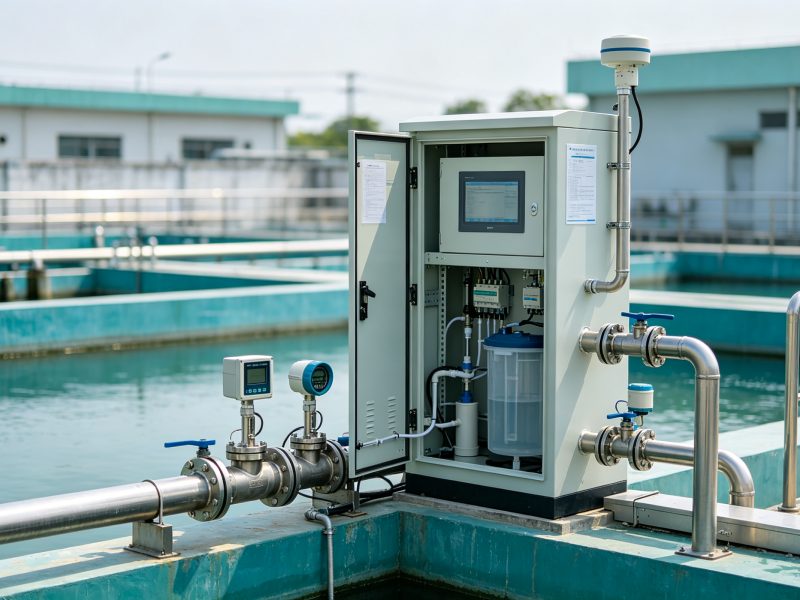
Accurate and efficient monitoring instruments are essential tools for reliable detection and process control.
Shandong Dongrun Instrument has 25 years of experience and is a national-level “Specialized, Refined, Differential, and Innovative” enterprise. We focus on the R&D, manufacturing, sales, and system integration of water quality monitoring sensors, online analyzers, and level instruments, and can design customized solutions according to customer requirements. Our products are sold in more than 40 countries and successfully applied in petrochemical, coal power, pharmaceutical, water resources, municipal, and other industries.
Dongrun Instrument’s products and services include:
- Online analyzers: TOC, BOD, COD, ammonia nitrogen, nitrate nitrogen, total phosphorus, total nitrogen, permanganate index, heavy metals.
- In-situ sensors: Digital UV254, ammonia nitrogen, nitrate nitrogen, pH, ORP, conductivity, salinity, dissolved oxygen, turbidity, suspended solids concentration, residual chlorine, temperature, etc.
- Intelligent level instruments: Magnetostrictive, magnetic flap, radar, radio frequency admittance, ultrasonic.
- Marine ecological in-situ monitoring: Full-spectrum multi-parameter analyzers, online chlorophyll/blue-green algae/oil in water, nutrients, total phosphorus, total nitrogen.
For more products, please click the link to learn about them.https://www.dongrun-instrument.com/products/