Secondary water supply is the “last mile” of the urban water system. Pump room water quality directly affects the safety of drinking water delivered to residents, making it a critical control point for water utilities and facility operators. However, many secondary supply systems still rely on periodic manual sampling and routine equipment inspections, which can delay the detection of water quality anomalies, miss pressure fluctuations, and leave equipment operating status without continuous oversight.
Shandong Dongrun Instrument’s online water quality monitoring solution for secondary water supply pump rooms creates an integrated water safety management system around pump room outlet water, tank inlet water, disinfection system performance, and remote data management. By connecting key monitoring points in the pump room, the solution helps water operators move from reactive inspection to proactive, continuous monitoring.
1. Address the hidden risks in the last mile of water delivery
Even when treated water leaves the main plant safely, secondary supply systems can introduce new risks during storage, pressurization, and distribution through pumping stations. These risks include bacterial regrowth, residual chlorine decay, turbidity changes, cross-contamination, leaks, and disinfection equipment faults.
Because these problems are not always visible, traditional sampling-based management may identify them only after residents have already noticed changes in water color, odor, or clarity. Online monitoring makes it possible to detect anomalies earlier, protect water quality at the point of delivery, and reduce health and regulatory risks.
2. Deploy monitoring instruments at critical pump room points
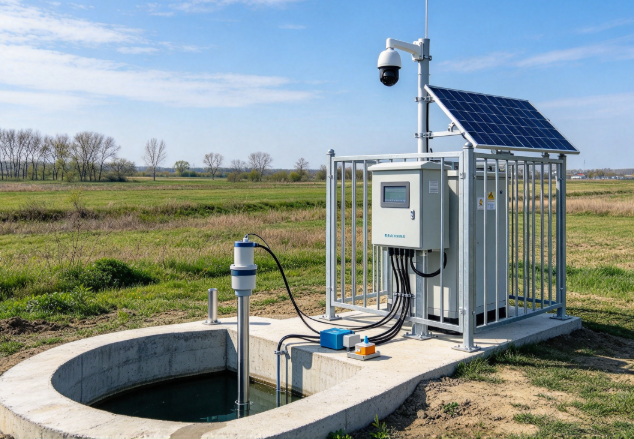
A well-designed secondary supply monitoring system should cover the most informative locations in the pump room, including the pump room outlet, tank inlet, and disinfection equipment interface. By placing instruments at these strategic points, operators can track water quality trends as water moves through the facility.
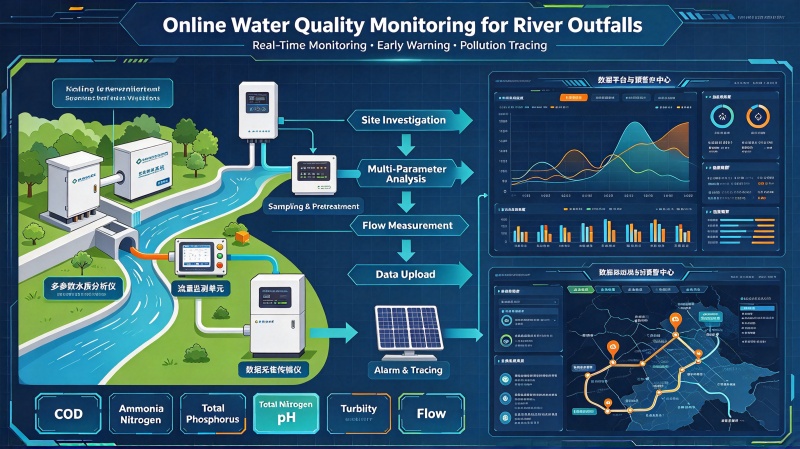
Dongrun’s solution focuses on core parameters such as pH, turbidity, residual chlorine, electrical conductivity, and water temperature. Additional modules for ammonia nitrogen, color, and bacteriological parameters can be added where required, giving operators a more complete view of potential water quality changes.
3. Link water quality monitoring with disinfection and process control
Monitoring alone is not enough. The most valuable pump room systems connect water quality data to the actual operation of disinfection equipment and process control. When residual chlorine, turbidity, or pH readings exceed defined thresholds, the system can trigger alarms and guide operators to investigate possible causes, such as network leakage, secondary contamination, or disinfection equipment malfunction.
This capability turns raw sensor data into actionable operational information. Instead of just recording measurements, the solution helps operators understand whether disinfection is performing effectively and whether the secondary supply process remains under control.
4. Integrate water quality, equipment status, flow, and pressure data
A complete secondary water supply solution should do more than measure water quality. It should also collect equipment status, flow, and pressure information, then transmit these data to a smart water management platform. This unified view makes it easier to evaluate whether a change in water quality is related to pump operation, tank level, pressure variation, or a specific process event.
Dongrun’s data acquisition and transmission unit supports continuous uploads to the management platform, where operators can view real-time pump room data, receive exception alerts, review historical curves, and generate monitoring reports. In selected scenarios, the system can also integrate video surveillance, access control, and pump group operation data, creating a combined “water quality + equipment + security” management environment.
5. Choose compact, robust equipment for limited pump room spaces
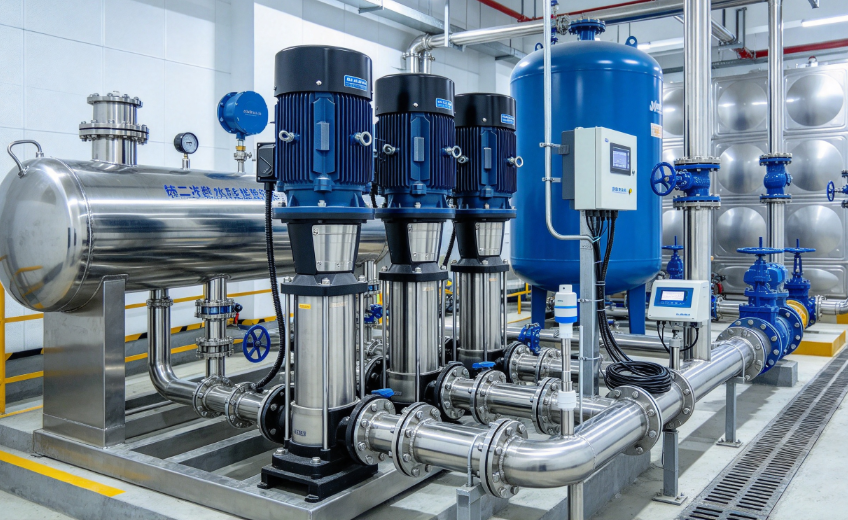
Secondary water supply pump rooms are often humid, confined spaces with limited room for large instrumentation. For this reason, the monitoring solution must be compact, easy to install, and robust enough for long-term unattended operation.
Dongrun’s solution uses high-protection wall-mounted or integrated monitoring devices with compact cabinets and clean wiring. These features reduce the impact on existing pump room layouts while maintaining stable operation in humid environments. The system also supports data logging after network interruptions, local data storage, and remote time synchronization, helping ensure data continuity, stability, and traceability.
6. Support end-to-end project implementation
Dongrun Instrument provides a full scope of services, including site investigation, solution design, equipment supply, installation and commissioning, platform integration, and operation and maintenance training. This end-to-end support helps water utilities implement the system smoothly without managing multiple vendors separately.
For water utilities, property managers, and industrial facility operators, a well-built secondary water supply monitoring system improves water quality safety, reduces reliance on frequent manual inspection, and strengthens the ability to detect anomalies early. By protecting the last mile of water delivery, operators can help ensure safer, more reliable drinking water for residents.