Upgrade your municipal wastewater monitoring system with Shandong Dongrun Instrument. Our 4-step one-stop solution covers site survey, equipment retrofit, network access, and acceptance—ensuring reliable COD, ammonia, total phosphorus, total nitrogen, pH, and DO data for regulatory compliance.
Why Municipal Wastewater Monitoring System Upgrade Is Urgent
After long-term operation, the original online monitoring systems in municipal wastewater treatment plants often suffer from aging instruments, significant data deviation, clogged pretreatment units, and poor platform connectivity. These issues make it difficult to steadily meet environmental regulatory requirements.
In China, the regulatory landscape for wastewater monitoring has become increasingly stringent. The implementation of the Technical Requirements for Data Transmission of Pollutant Automatic Monitoring and Monitoring Systems (HJ 212-2025) on January 1, 2026, introduced mandatory requirements for data encryption, full-process traceability, equipment identity authentication, and full log uploading. Traditional sampling equipment often faces problems such as protocol incompatibility, sample distortion, delayed over-limit sample retention, and unencrypted transmission, which can lead to data invalidation and environmental inspection risks.
Meanwhile, policies issued by multiple national ministries have set binding transformation targets for wastewater treatment plants: by 2027, key regions should build a new generation of smart monitoring networks, and by 2030, 90% of large and medium-sized wastewater plants should complete digital transformation, with unit treatment energy consumption reduced by 20%. Against this backdrop, Shandong Dongrun Instrument offers an upgrade solution for online water quality monitoring systems in municipal wastewater plants, delivering one-stop implementation from site investigation and equipment replacement & retrofitting to network access and acceptance.
Step 1: On-Site Condition Inspection for Municipal Wastewater Monitoring System Upgrade
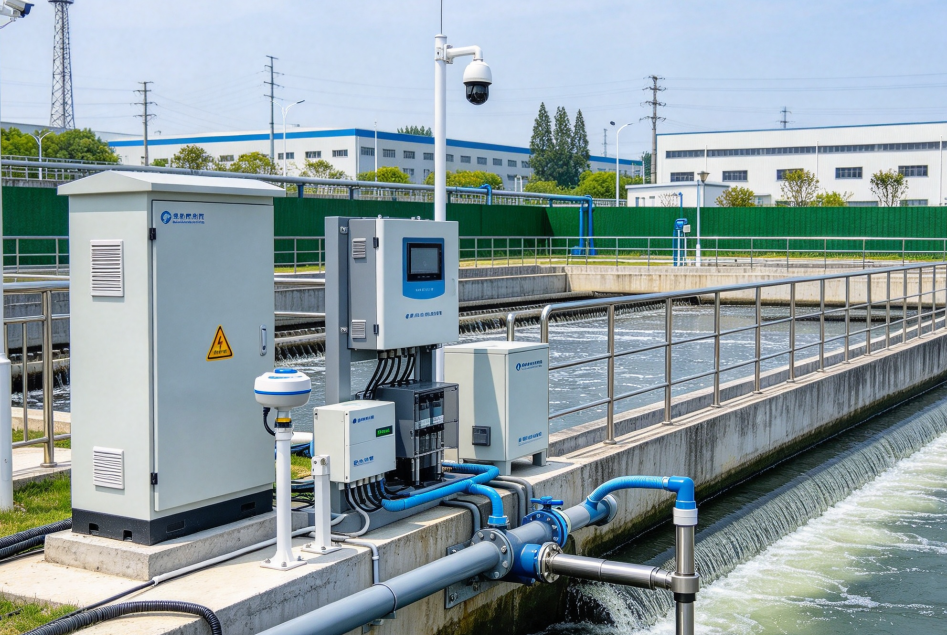
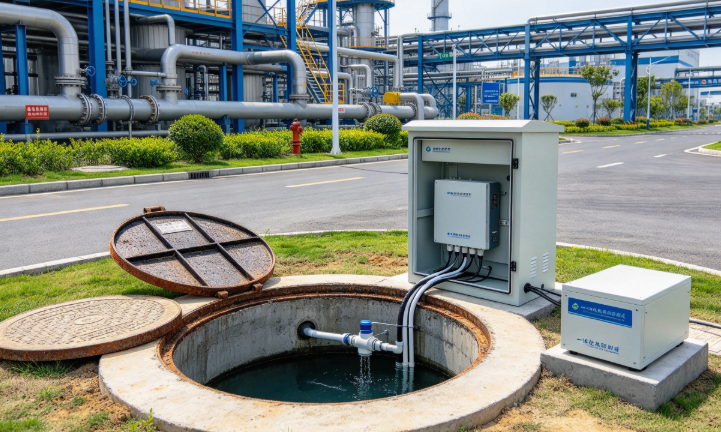
As the first step of the municipal wastewater monitoring system upgrade, we conduct an on-site condition inspection to identify deficiencies in the existing water sampling units, pretreatment equipment, water quality analyzers, and data acquisition instruments. The inspection covers the full chain of the monitoring system, from the sampling point and flow measurement unit to the monitoring station building, water quality automatic sampling unit, and data control unit, in accordance with the Technical Specification for Installation of Wastewater On-line Monitoring System (CODCr, NH3-N, etc.).
A systematic inspection at this stage helps identify root causes of data deviation, including electrode aging, improper installation positions, and insufficient calibration frequency, which are common sources of measurement drift in operating wastewater plants.
Step 2: Equipment Replacement and Water Sample Pretreatment Optimization
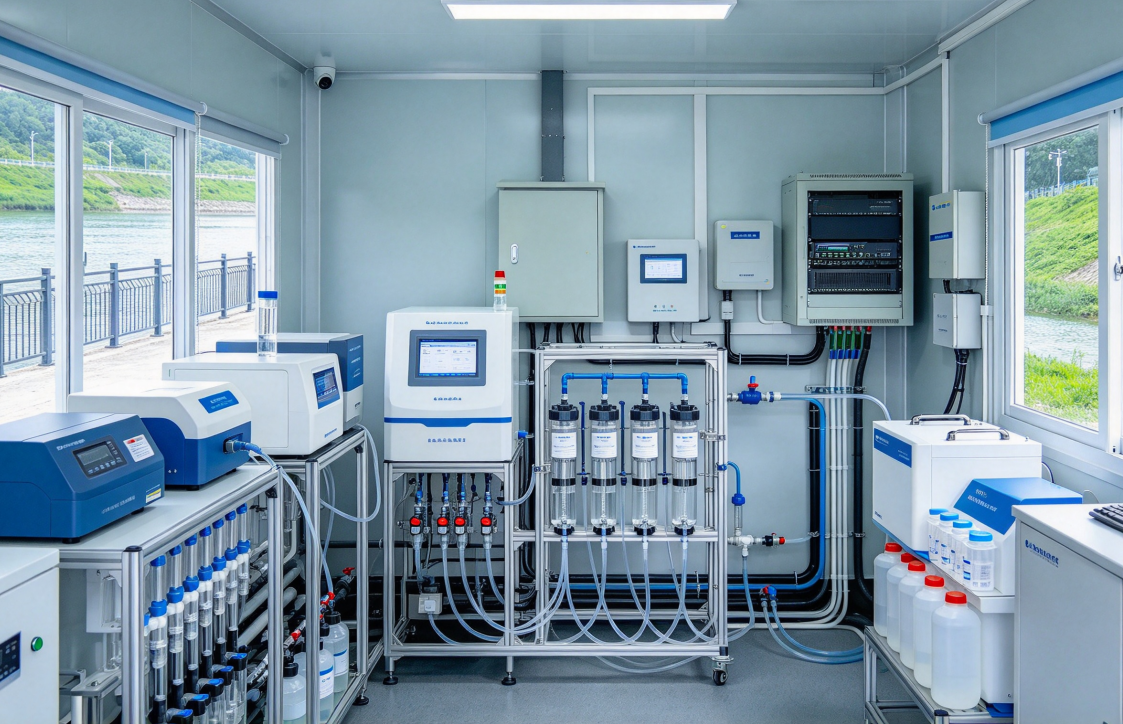
We replace monitoring meters, including COD analyzer, ammonia analyzer, total phosphorus, total nitrogen, pH, and dissolved oxygen, as required, and optimize the water sample pretreatment workflow to reduce sludge adhesion and pipeline blockage, cutting on-site maintenance workload.
For COD, total phosphorus, and total nitrogen measurement, the pretreatment typically involves coarse filtration combined with ultrasonic homogenization to preserve pollutant components. For ammonia nitrogen measurement, coarse filtration followed by fine filtration with automatic pipeline flushing helps prevent clogging and reduce maintenance frequency.
The upgraded system comes with automatic cleaning, auto-calibration, and over-limit sample retention functions to ensure continuous and reliable water quality data for both influent and effluent of the wastewater plant. The automatic sampling system can work in coordination with analyzers in real time: when a measured value exceeds the limit, it immediately triggers sample retention and synchronously uploads the over-limit time, sample number, and concentration to the regulatory platform, forming a complete evidence chain for environmental compliance verification.
Step 3: Data Transmission Module Retrofitting and Platform Integration
Meanwhile, we carry out retrofitting of the data transmission module. Compatible with standard environmental protocols, the system enables real-time upload of monitoring data to regulatory platforms. This aligns with the requirements of HJ 212-2025, which mandates direct connection between primary instruments and data acquisition units to eliminate the risk of data tampering through industrial computers, and requires full uploading of monitoring data, equipment operating parameters, and equipment status to achieve full transparency in the data collection and transmission process.
The system supports remote viewing of data curves, over-limit alarms, and historical record queries. Considering the humid and corrosive environment inside the plant, equipment cabinets with higher protection ratings are selected to improve the long-term stability of the system. The upgraded transmission architecture supports encrypted communication and device identity authentication, ensuring that monitoring data remains secure and traceable throughout the entire data lifecycle.
According to industry market research, the global sewage treatment remote monitoring system market is projected to grow from US$1,578 million in 2025 to US$3,760 million in 2032, at a CAGR of 13.3%, driven by increasingly stringent environmental standards and intelligent upgrades of aging facilities. This market momentum underscores the timeliness of municipal wastewater monitoring system upgrade projects.
Step 4: Comparative Acceptance and Ongoing After-Sales Maintenance
Boasting rich experience in wastewater plant monitoring retrofitting projects, Shandong Dongrun Instrument provides services including solution design, equipment supply, installation & commissioning, comparative acceptance, and after-sales maintenance.
The comparative acceptance process typically involves side-by-side comparison between upgraded online monitoring data and laboratory reference data across a defined validation period, ensuring that the retrofitted system meets regulatory accuracy requirements before formal network access.
We help wastewater plants resolve abnormal monitoring data issues and complete system upgrading and renovation in compliance with regulations. Through systematic retrofit of sampling, pretreatment, analysis, and data transmission units, the upgraded online water quality monitoring system enables municipal wastewater treatment plants to achieve stable data upload, reduce on-site maintenance workload, and strengthen overall regulatory compliance.
Conclusion: Why Choose Dongrun for Municipal Wastewater Monitoring System Upgrade
Shandong Dongrun Instrument offers a 4-step one-stop approach to municipal wastewater monitoring system upgrade, covering site investigation, equipment replacement, data transmission retrofitting, and comparative acceptance. With rich experience in wastewater plant monitoring retrofit projects, Dongrun helps treatment plants resolve abnormal monitoring data issues and achieve regulatory compliance through a systematic, standard-based approach.