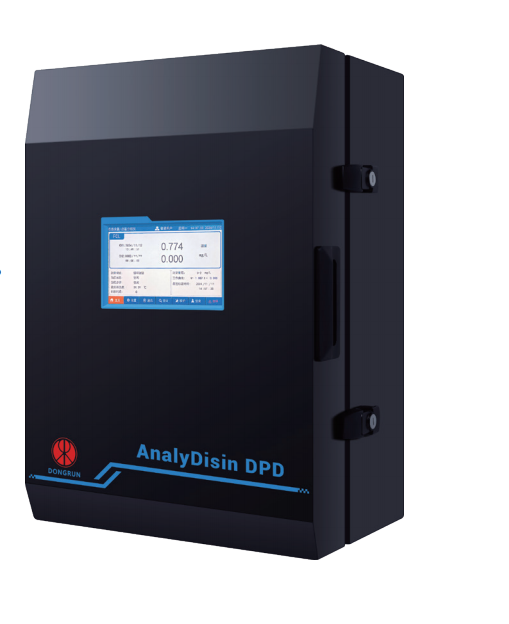
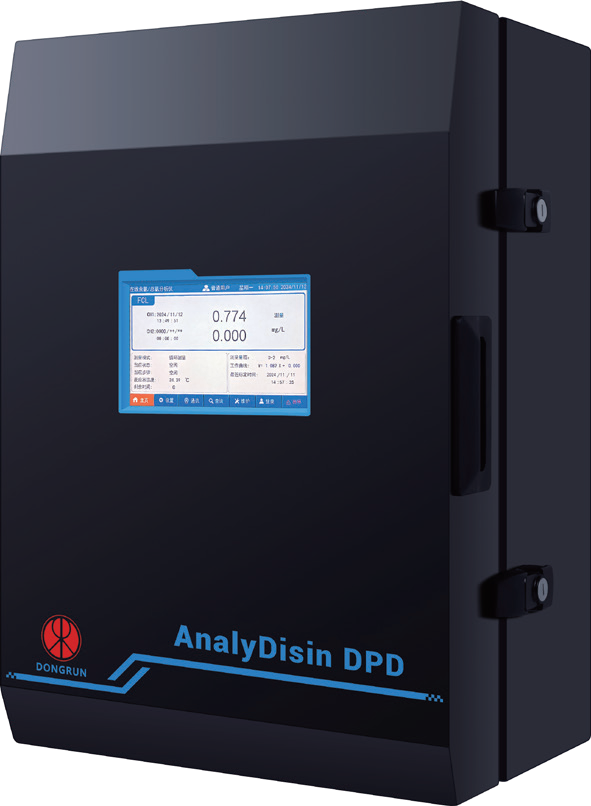
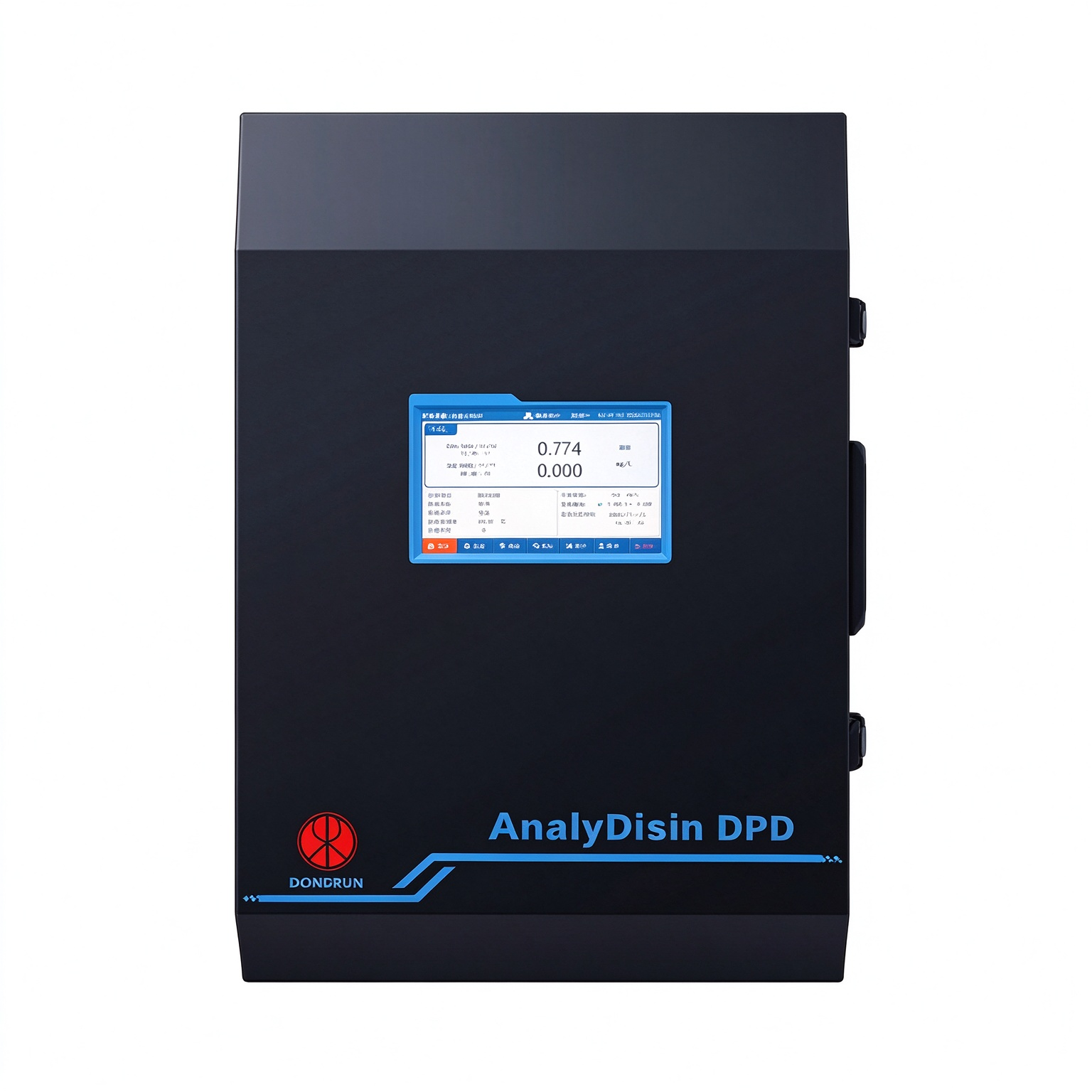
Typical Applications
- Drinking Water Safety: Waterworks outlet tap water, end of water distribution network, secondary water supply, rural water improvement, direct drinking water, bottled water.
- Industrial Process: Reverse osmosis feed water, circulating cooling water, boiler water, power plant warm discharge water, seawater desalination.
- Medical and Disease Control: Monitoring and disinfection of medical wastewater and water sources after disasters.
- Food Processing: Process water, CIP disinfection process water, bottle washing water.
- Environmental Protection: Disinfection assessment of water sources, wastewater discharge.
- Other Scenarios: Chlorination disinfection evaluation for swimming pool water, hot spring water, seawater aquaculture, laboratory comparison, etc.
Product Features
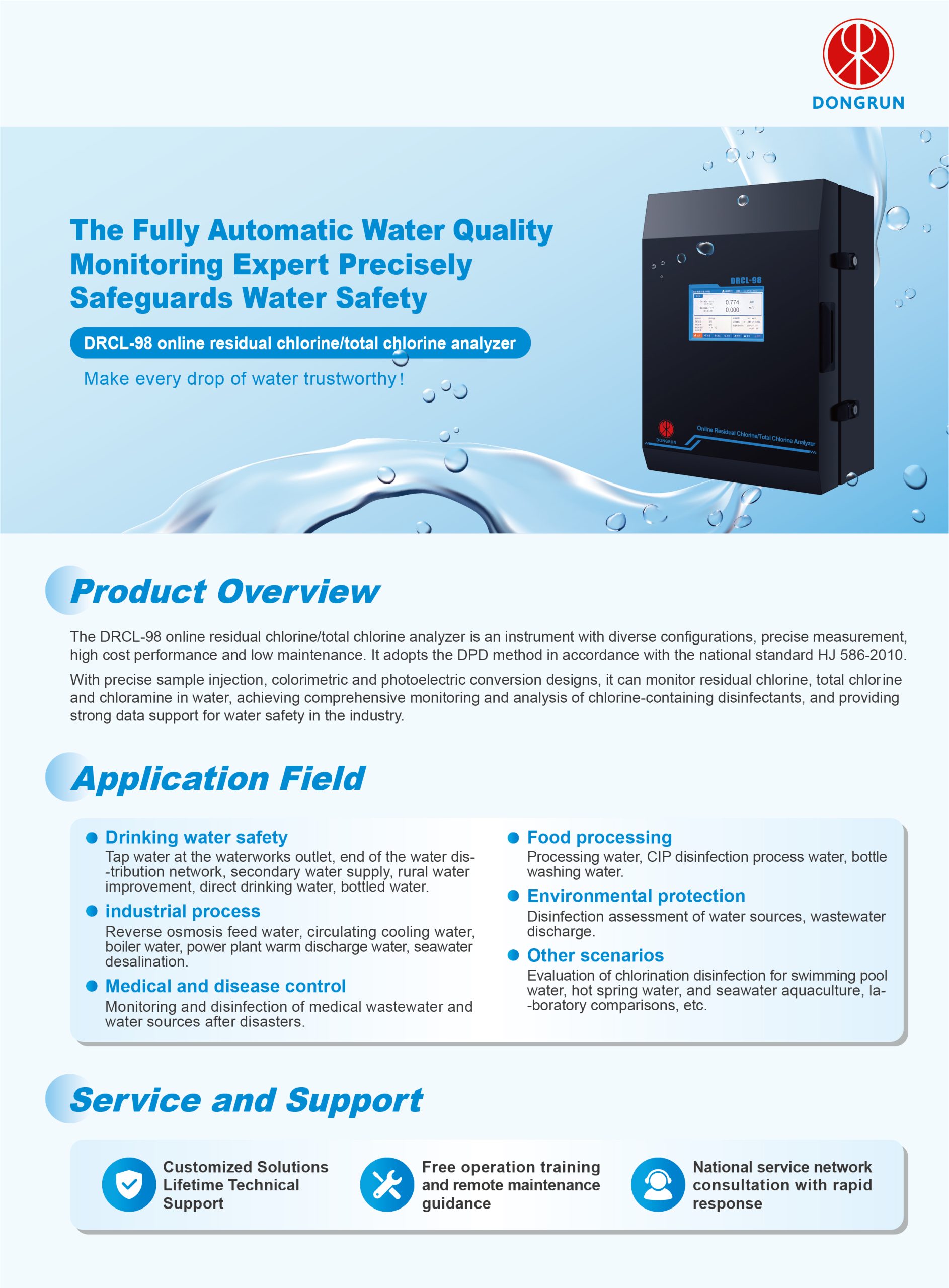
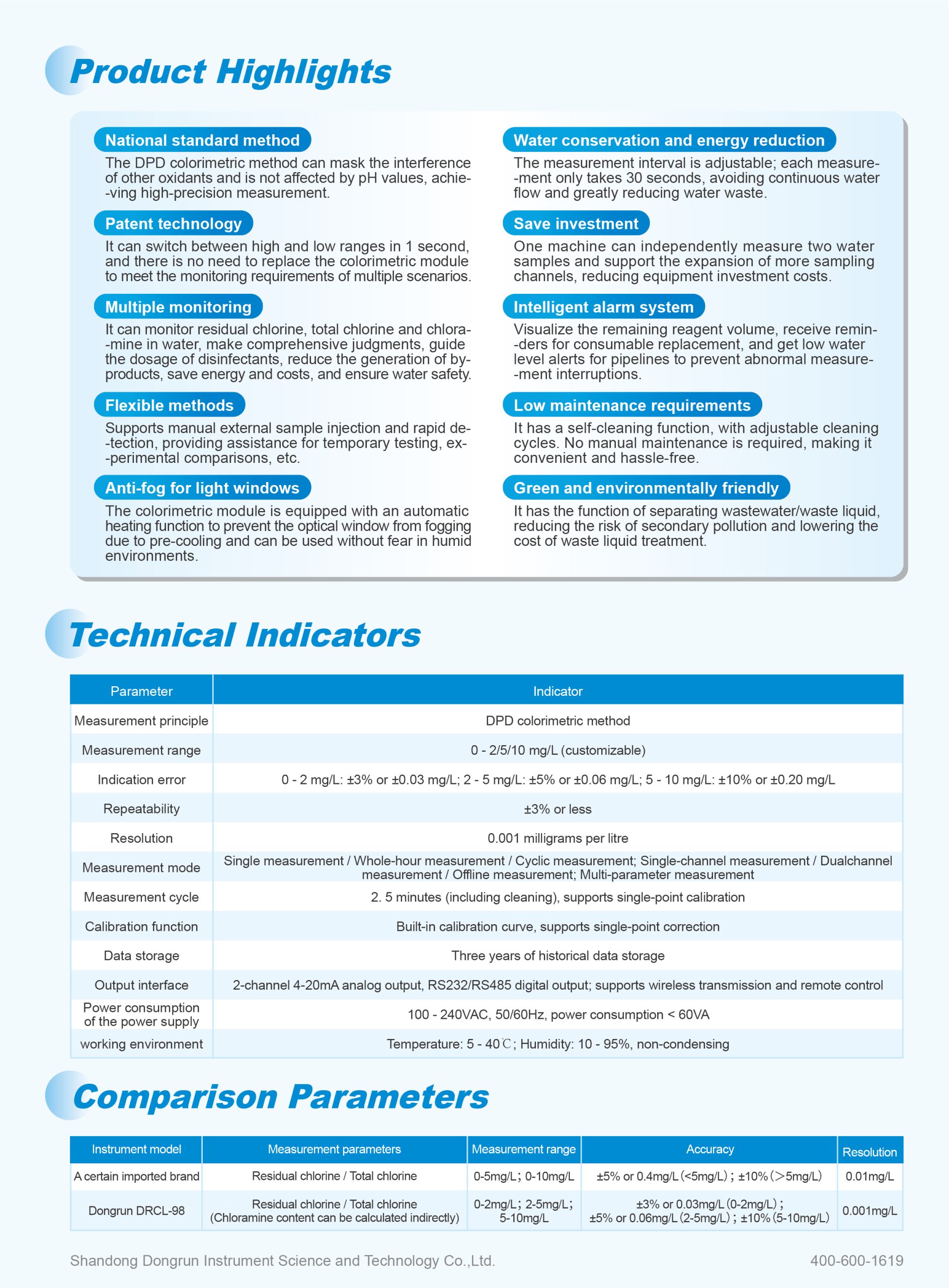
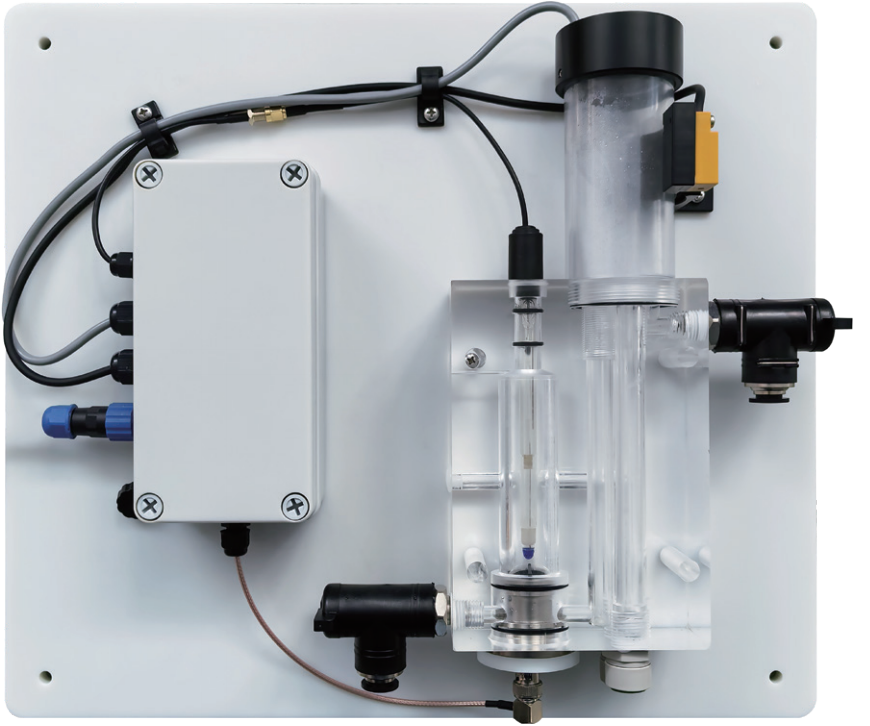
- Adopts national standard DPD colorimetric method, which can mask interference from other oxidants and is not affected by pH value to achieve high-precision measurement.
- Unique patented technology: it can switch between high and low ranges in 1 second, no need to replace the colorimetric module to meet monitoring requirements of multiple scenarios.
- The colorimetric module is equipped with a built-in automatic heating function to prevent fogging of optical windows due to pre-cooling, suitable for humid environments.
- It can monitor residual chlorine, total chlorine, chloramine, and chlorine dioxide in water, provide comprehensive judgment, guide disinfectant dosing, reduce the generation of by-products, save energy and cost, and ensure water safety.
- Dual-channel design: one instrument can measure two water samples simultaneously and supports expansion of more sampling channels to reduce equipment investment cost.
- Supports manual external sample injection and rapid detection, assisting temporary testing and laboratory comparison.
- Adjustable measurement interval, only 30 seconds per measurement, no continuous water flow, greatly reducing water waste.
- Visual reagent remaining volume, reminder for consumable replacement, and pipeline water shortage alarm to avoid abnormal measurement interruption.
- Self-cleaning function with adjustable cleaning cycle, no manual maintenance required, convenient and labor-saving.
- Wastewater / waste liquid separation function to reduce secondary pollution risk and cut waste liquid treatment cost.
Measuring Principle
- Residual Chlorine: Under pH 6.2~6.5, free chlorine reacts directly with N, N‑Diethyl‑1,4‑phenylenediamine (DPD) to form red compound. The absorbance is measured at 525 nm, and the residual chlorine concentration is calculated via a working curve.
- Total Chlorine: Under pH 6.2~6.5, free chlorine and combined chlorine (hypochlorite, chloramine, etc.) react with potassium iodide. The generated iodine molecules react with DPD for color development to form red compound. The absorbance is measured at 525 nm, and total chlorine concentration is calculated via working curve.
- Chlorine Dioxide: Under pH 6.2~6.5, masking agent is added to eliminate interference from residual chlorine. Chlorine dioxide in water reacts with DPD to form red compound. The absorbance is measured at 525 nm, and absorbance is proportional to chlorine dioxide concentration. Chlorine dioxide concentration is calculated via working curve.
| Parameter | Performance Indicator |
|---|---|
| Measured Parameters | Residual chlorine, total chlorine, chloramine, chlorine dioxide |
| Measuring Range | 0–2 / 5 /10 mg/L |
| Indication Error | Whichever is greater between ±3% or ±0.03 mg/L (0–2 mg/L)
Whichever is greater between ±5% or ±0.06 mg/L (0–5 mg/L) Whichever is greater between ±10% or ±0.2 mg/L (0–10 mg/L) |
| Repeatability | ≤3% |
| Limit of Detection | ≤0.03 mg/L |
| Resolution | 0.01 mg/L |
| 24h Zero Drift | ≤0.03 mg/L |
| pH Range | 6.5–8.5, customized for special working conditions |