Irrigation districts rely on canal networks to deliver water and manage return flows. However, canals may extend across large areas, operate under changing field conditions, and offer limited opportunities for manual inspection. When water quality and flow are checked separately, managers lack a synchronized view of canal conditions. Periodic sampling and manual flow measurement can delay the identification of abnormal water conditions or changes in conveyance.
Shandong Dongrun Instruments provides an irrigation canal monitoring system based on coordinated water quality and flow measurement, remote data transmission, and centralized supervision. The solution combines online water quality instruments, an ultrasonic open-channel flow meter, level sensors, data acquisition, and platform connection to help managers obtain water-quality and flow information from key canal locations.
1. Plan Monitoring Points Along the Canal Network for irrigation canal monitoring system
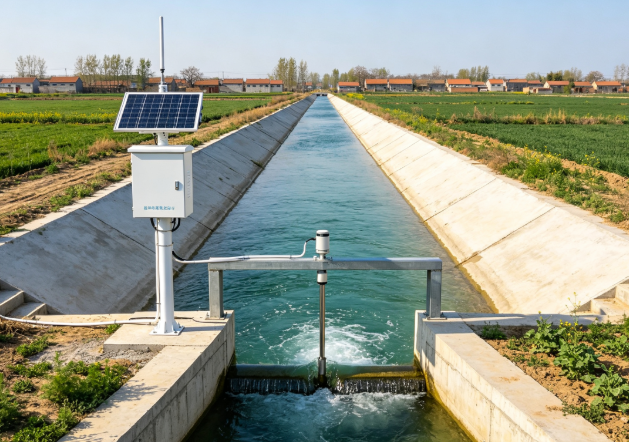
The first step is to identify canal locations that are important to irrigation-water management. Monitoring points can be arranged at main and branch canal diversion points, water-intake nodes, and return-water outlets. These locations cover key points where water is distributed into canals or discharged from the irrigation network.
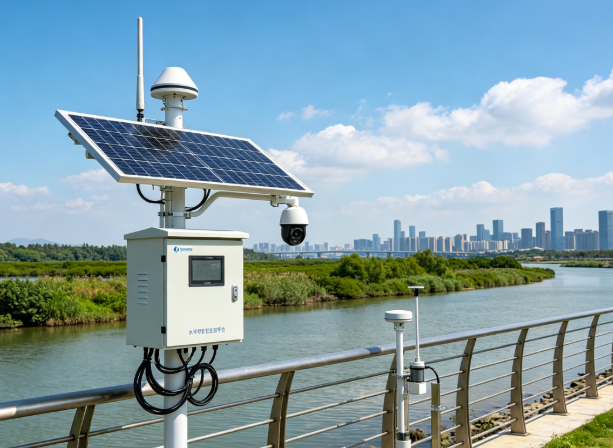
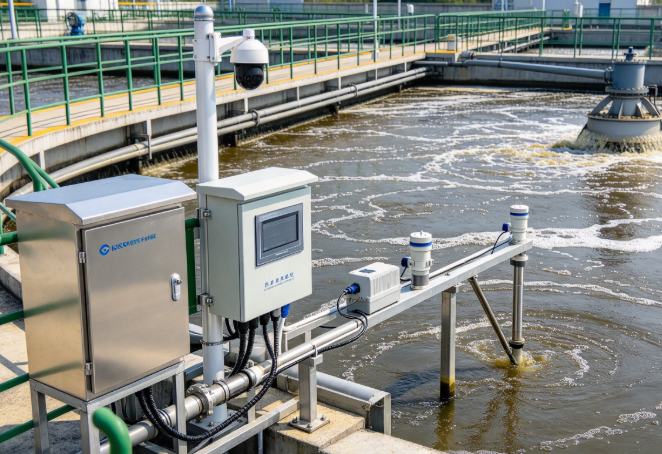
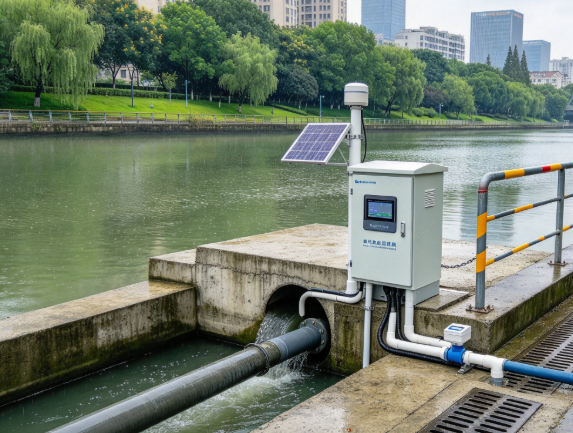
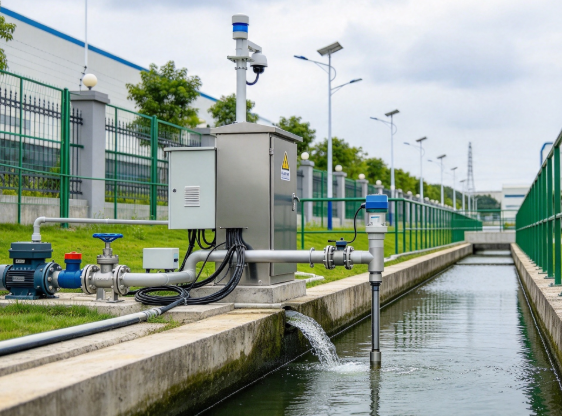
Instrument configuration is selected according to the management requirements of each site. Online water quality instruments include multi-parameter analyzers and water quality sensors that can be configured for pH, dissolved oxygen, turbidity, ammonia nitrogen, and total phosphorus. An ultrasonic open-channel flow meter and a water-level sensor collect flow and level data alongside water quality measurements. This allows water quality and hydraulic information to be acquired together instead of through separate manual activities.
The U.S. Environmental Protection Agency’s Water Sensors Toolbox is a useful reference for measurements supported by water sensors, including pH, dissolved oxygen, turbidity, nitrogen-related parameters, phosphorus, water level, and flow rate. The EPA also identifies sensor placement and data transfer as practical considerations when planning a monitoring arrangement.
2. Configure Equipment for Exposed Canal Conditions
Irrigation canal monitoring systems are often outdoors, where monitoring equipment may be exposed to wind-blown sand, debris, and limited power and communication infrastructure. These conditions need to be considered when monitoring points and sampling arrangements are designed.
The solution matches the equipment with water-intake and pretreatment components, together with automatic backwashing and protective components. These arrangements are intended to reduce the likelihood of sampling-line blockage and equipment faults under the field conditions described above. Solar power and 4G wireless transmission can be used according to the site configuration.
The flow measurement method should also match the canal and selected instrument. ISO 6416 describes gauging stations using the ultrasonic transit-time method for continuous discharge measurement in rivers, open channels, and closed conduits. It is a technical reference when the selected meter uses this specific measurement principle; applicability should be confirmed against the instrument configuration.
3. Collect, Store, and Transmit Water Quality and Flow Data for irrigation canal monitoring system
A data acquisition terminal collects information from the monitoring instruments and sensors. The solution supports local data caching, retaining readings at the monitoring point before transmission to the management platform. It also provides audible and visual alarms when monitored values exceed configured limits.
Through 4G wireless transmission, data from distributed canal sites can be sent to a centralized platform for unified supervision. Managers can review water quality, flow, and water-level information across monitoring points instead of relying only on separate inspection records. This coordinated dataset presents changing water and flow conditions in one monitoring workflow.
The Food and Agriculture Organization of the United Nations (FAO) assesses irrigation systems through water resources, management, and water-delivery service, including the physical characteristics, performance, operating policy, condition, and maintenance of the delivery system. Its Rapid Appraisal Procedure for irrigation systems provides a relevant reference for the wider management context in which canal monitoring data may be used.
4. Use Synchronized Monitoring to Support Irrigation Management
The connected monitoring points help managers track the quality of incoming canal water and the flow passing through monitored sections. The terminal can issue audible and visual warnings when water-quality values exceed configured limits. The monitoring arrangement can also help identify events such as an interruption in water conveyance or a sudden change in flow.
By bringing water quality, flow, and water-level information together, the solution supports irrigation-water distribution, return-water management, and the tracing of potential non-point-source pollution. Data from different canal nodes helps managers review conditions and respond to abnormal readings or flow changes. Source tracing and operational actions depend on site conditions and the irrigation authority’s procedures.
5. Integrated Project Delivery and Technical Support
Shandong Dongrun Instruments provides project services including on-site investigation, monitoring-point planning, equipment supply, installation and commissioning, platform connection, and operation and maintenance training. These activities connect field monitoring equipment with the data-management process for centralized supervision.
For irrigation districts, the key is not simply to add individual instruments. Water quality and flow measurements need to be planned around the same important canal nodes, configured for outdoor operating conditions, and connected to a management platform. Dongrun’s irrigation canal water quality and flow monitoring solution follows this approach, helping managers move from periodic, separate manual checks toward coordinated online monitoring across distributed canal sites.
Contact Shandong Dongrun Instruments to discuss an irrigation canal monitoring configuration based on your project locations and monitoring requirements.