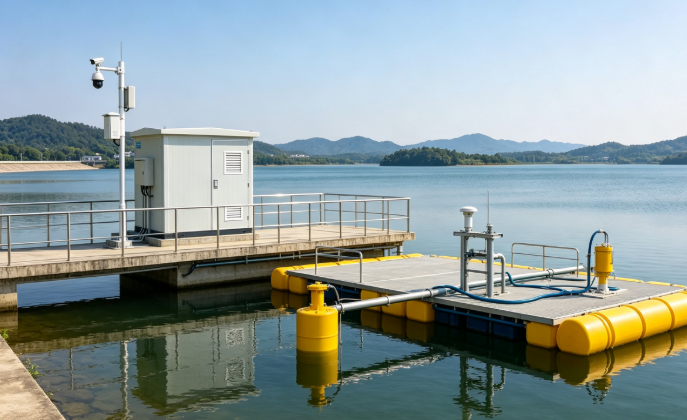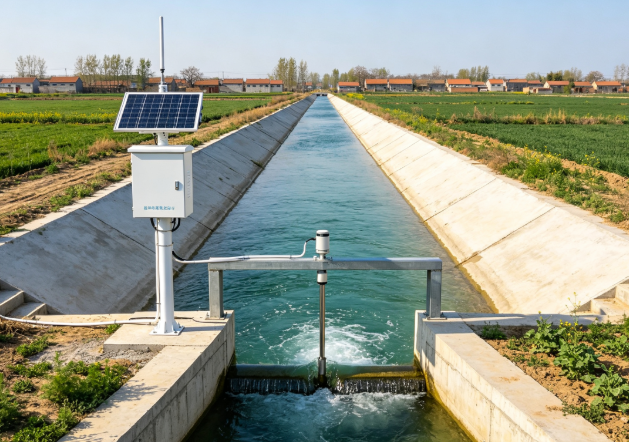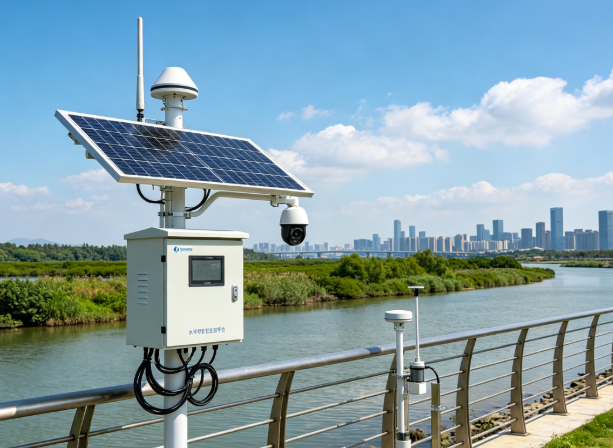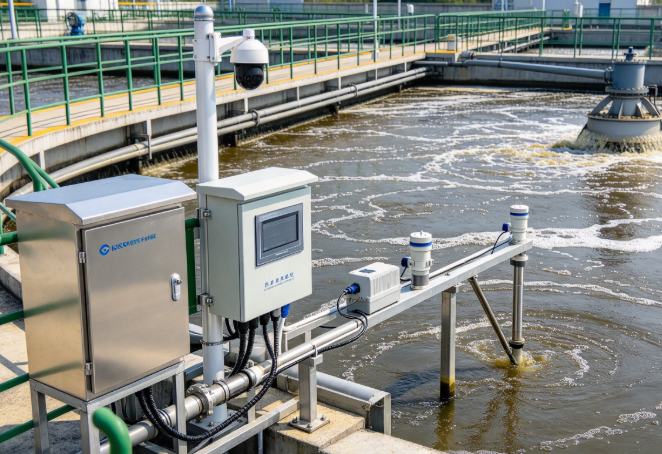
Lake and reservoir drinking water sources require reliable monitoring because water quality can vary by location, depth, and season. An automatic station is more than a set of analyzers beside the water: its reliability depends on representative sampling, suitable intake and pretreatment, appropriate instruments, dependable data transmission, and documented acceptance and maintenance.
Shandong Dongrun Instruments provides a lake and reservoir water quality monitoring station solution covering site selection, water sampling, online analysis, data transmission, commissioning, and operation and maintenance. For projects in China, the applicable standards should be checked as a group. Since 1 July 2025, HJ 915.1—2024, HJ 915.2—2024, and HJ 915.3—2024 have addressed site selection and infrastructure, installation and acceptance, and operation and maintenance, respectively. HJ 1404—2024 specifies communication requirements for surface-water automatic monitoring systems.
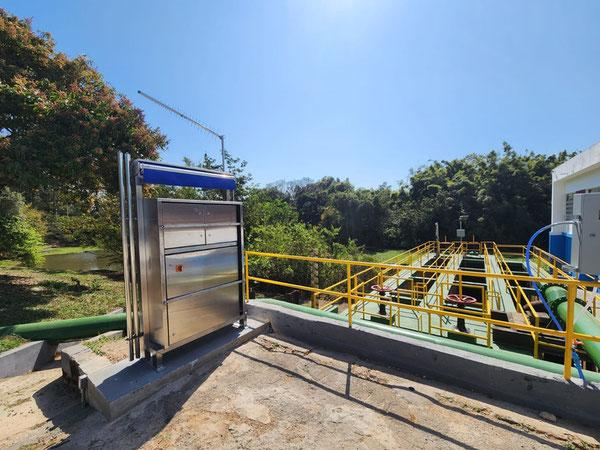
1. Select a Representative Monitoring Site
The monitoring point should reflect conditions in the target source-water area and, where relevant, near the water intake. Site planning should consider water circulation, depth, seasonal water levels, shoreline conditions, and potential interference. Backwater areas, stagnant zones, sediment accumulation, dense aquatic vegetation, and locally disturbed water may not provide representative samples. The selected location should be checked against the project objective and MEE standard HJ 915.1—2024, which covers station location, station buildings, and water-sampling units.
Lake and reservoir water may be vertically stratified. A fixed-depth intake may not represent the layer relevant to a specific monitoring objective. Where stratification is expected, an adjustable-depth intake can be considered, with the selected sampling depth verified during commissioning. The HJ 91.2—2022 surface-water monitoring specification provides a reference for sampling-point arrangement, collection, monitoring methods, quality assurance, and records.
2. Design the Water Intake and Pretreatment System
The intake unit connects source water to the analyzers, so it directly affects sample delivery and station operation. At exposed lake and reservoir sites, the design should consider algae, suspended matter, and other material that may enter or obstruct the sampling line. The proposed configuration includes water-sampling pretreatment, anti-algae and anti-blocking protection, and automatic backwashing components to reduce the risk of line blockage and support routine maintenance.
The intake pipe, pump, pretreatment components, and analyzer connections should be designed as one sampling path. During installation and trial operation, check sample delivery, leakage, blockage, and intake depth to confirm that the system operates as intended.
3. Configure Online Water Quality Monitoring Parameters
Instrument selection should follow the monitoring objective, waterbody characteristics, applicable standards, and project specification. The proposed configuration includes the conventional five parameters: water temperature, pH, dissolved oxygen, turbidity, and conductivity. Total phosphorus, total nitrogen, and chlorophyll-a analyzers can be added for nutrient and algae-related monitoring in lakes and reservoirs.
The conventional five describe basic water-quality conditions; total phosphorus and total nitrogen support nutrient assessment; and chlorophyll-a provides an indicator related to algal biomass and trophic conditions. The U.S. EPA’s nutrient criteria for lakes and reservoirs discusses total nitrogen and total phosphorus in relation to designated uses, including drinking water sources, and includes chlorophyll-related models. Chlorophyll-a can help track algae-related changes, but it is not, by itself, species-specific identification of blue-green algae.
4. Build Station Infrastructure and Data Transmission
A field station should include a suitable monitoring shelter, power supply, lightning protection, and video monitoring facilities according to site conditions and project design. The data acquisition terminal collects analyzer readings and station information. Where supported by the configured terminal, local storage can retain data during communication interruptions; alarms can be triggered when configured thresholds are exceeded. Alarm limits should follow project requirements and management procedures.
For projects connected to China’s surface-water environmental monitoring network, the data interface and communication process should be designed and tested against MEE standard HJ 1404—2024. It specifies system structure, protocol layers, and data and information transmission requirements for surface-water automatic monitoring systems.
5. Complete Acceptance and Routine Maintenance
Construction is not complete when the analyzers are powered on. Installation checks, commissioning, trial operation, comparison testing where required, and acceptance documents should be completed under the applicable project requirements. HJ 915.2—2024 covers installation, commissioning, trial operation, and acceptance. HJ 915.3—2024 covers inspection, maintenance, operational quality control, abnormal-condition handling, and operation records.
A maintenance plan should cover the sampling line, pretreatment and backwashing components, analyzers, data acquisition, and communication links. Routine checks and records help identify instrument drift, sampling problems, and data interruptions.
An Integrated Solution for Lake and Reservoir Source-Water Monitoring
Shandong Dongrun Instruments provides site investigation, monitoring-point planning, equipment supply, installation and commissioning, platform connection, and operation and maintenance training. By coordinating representative sampling, online analysis, standard-based data transmission, acceptance, and ongoing maintenance, the solution helps source-water managers monitor lake and reservoir conditions and identify abnormal readings for timely review and response.
Contact Shandong Dongrun Instruments to discuss a monitoring station configuration for your source-water project.